
Digital Asset Claims Digital Asset Trace & Transaction Reconstruction
Digital Asset Trace & Transaction Reconstruction rebuilds the observable path of a digital asset as it moves across wallets, transactions, blockchain networks, smart contracts, bridges and other on-chain activity, producing a documented transaction path rather than a single screenshot or block-explorer link.
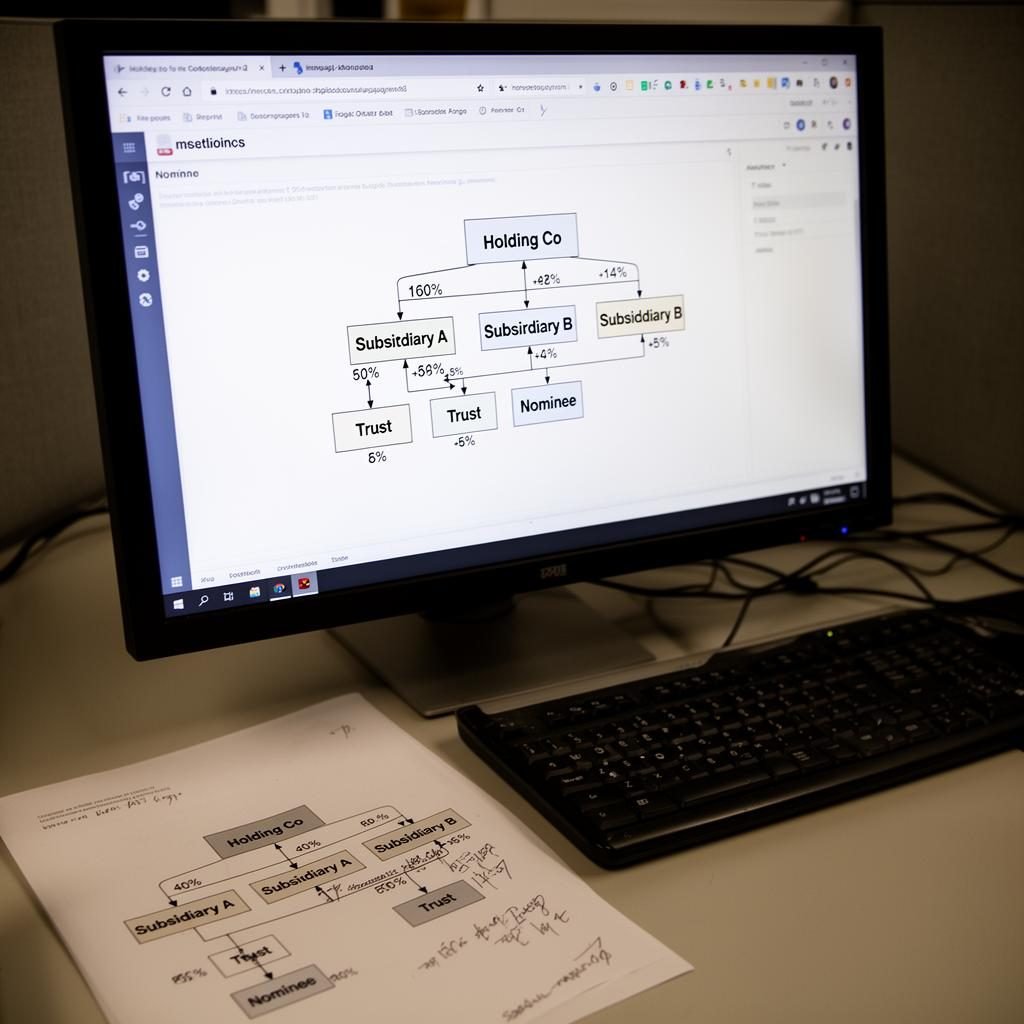
Why A Transaction Path Goes Missing
A single block-explorer screenshot shows one transaction. It does not show the twelve that came after it, the swap that changed the token, the bridge that moved value to a second network, or the point at which the trail entered a pooled venue wallet and stopped being individually observable.
Most people arrive holding fragments: an address, a hash, a platform email, a date. The movement between those fragments is exactly what is missing, and it is that movement — ordered, timestamped and referenced — that a claim, a report to a regulator or a legal adviser actually needs.
Scope Of A Trace Engagement
This service is the core of Digital Asset Claims' Blockchain Transaction Reconstruction work. It examines a starting point — a wallet address, a transaction hash, a contract interaction or a reported incident — and follows the observable flow of value outward or backward across the relevant blockchain network or networks.
The reconstruction covers direct wallet-to-wallet transfers, interactions with smart contracts (including token approvals, swaps and staking events), movement across bridges between chains, and any other transaction type that is recorded on a public or otherwise accessible ledger. Where an asset is wrapped, swapped or converted, both sides of that conversion are reconstructed and linked, so a single logical asset flow can be followed even where its on-chain representation changes.
Cross-Chain and Bridge Activity
Where value crosses a bridge or is wrapped into a different token standard, the reconstruction treats the two chains as one connected event rather than two separate, unrelated ones. The originating transaction, the bridge contract interaction and the corresponding mint or release on the destination chain are documented together with their respective hashes and timestamps.
Smart Contract Interactions
Contract calls are decoded where the contract is verified or its interface is otherwise identifiable, so that a swap, deposit or approval is recorded in plain terms alongside the raw call data, rather than left as an opaque hexadecimal string.
What We Need To Begin A Trace
A reconstruction typically begins with one or more of: a wallet address, a transaction hash, a contract address, an approximate date range, or platform-provided exports the client is lawfully entitled to hold (such as an exchange withdrawal confirmation). The more precise the starting reference, the narrower and faster the reconstruction; a vague description without any address or hash will usually require a preliminary Digital Evidence Discovery & OSINT Research phase first.
How The Path Is Rebuilt
Work proceeds in stages: capture of the relevant on-chain records at the addresses and transactions in scope; expansion outward along each transfer to the next address, contract or bridge event; classification of each hop by type (transfer, swap, bridge, contract call); and corroboration of ambiguous hops against a second source, such as a block explorer, a node query and a labelled-address dataset, before they are treated as established.
Every hop is timestamped and referenced by its transaction hash and block height, so the reconstruction can be independently re-verified by a third party reading the same public ledger.
What A Trace Engagement Produces
The engagement closes with a written reconstruction rather than a raw data export, built so that a non-technical reader can follow the flow of value while a technical reviewer can verify every reference against the underlying chain.
Where A Trace Stops
A transaction reconstruction shows where value moved on-chain. It does not, on its own, establish who controlled a given address, why a transaction occurred, or what happened to funds once they reach a venue that does not expose its internal ledger (for example, once pooled inside a custodial exchange wallet). Those questions require Wallet Origin & Historical Path Analysis, Asset Relationship & Entity Mapping, or corroborating off-chain evidence, and the report states plainly where the on-chain trail ends.
Technology Applied To Trace Work
Direct node and RPC queries
Transaction and block data is read from chain nodes, not only from third-party explorer front ends, so records can be re-pulled at any time.
Address clustering heuristics
Co-spend, change-output and behavioural heuristics group addresses that are likely under common control, with the heuristic named in the report.
Contract ABI decoding
Verified contract interfaces are used to translate raw call data into named functions and decoded parameters.
Bridge event matching
Lock, burn, mint and release events are matched across networks by amount, timestamp window and bridge contract state.
Data Examined In A Trace
- Transaction hashes, block heights and confirmation timestamps
- Input and output addresses, including change outputs
- Token contract addresses, decimals and transfer event logs
- Smart contract calls, approvals, swaps and their decoded parameters
- Bridge contract interactions on both source and destination networks
- Publicly labelled address datasets and venue deposit-address references
- Client-supplied platform exports the client is lawfully entitled to hold
How A Trace Reconstruction Runs
- Step 01
Anchor the starting point
The supplied address, hash or contract is confirmed on-chain and fixed as the anchor for all subsequent work.
- Step 02
Capture the immediate record
All transactions at the anchor within the agreed window are captured with their raw fields preserved.
- Step 03
Expand hop by hop
Each transfer is followed outward or backward to the next address, contract or bridge event.
- Step 04
Classify each hop
Every hop is typed as transfer, swap, bridge, contract call or venue deposit.
- Step 05
Corroborate ambiguity
Any hop that could be read two ways is tested against a second independent source before it is carried forward.
- Step 06
Mark the terminus
The point at which the observable trail ends is stated explicitly, with the reason it ends.
- Step 07
Document and grade
The full path is written up with hashes, block heights and a confidence grade against every link.
Deliverables
Transaction Path Document
Ordered sequence of hops with hashes, block heights, timestamps and hop type.
Cross-Chain Bridge Map
Linked view of originating and destination-chain events for any bridged or wrapped assets.
Contract Interaction Log
Decoded record of relevant smart contract calls encountered along the path.
Break-Point Register
Explicit list of points at which the observable trail stops, and the reason recorded for each.
Evidence Confidence Classification
Every finding is graded so that what is established, what is indicative and what remains unresolved are never presented as the same thing.
- Verified
- Independently confirmed by two or more unrelated sources.
- Strongly Supported
- Consistent with multiple sources, with no material contradiction observed.
- Partially Supported
- Consistent with at least one source, but corroboration is incomplete.
- Unverified
- Recorded as observed, but no independent corroborating source has been located.
- Conflicting
- Sources disagree, and the conflict is documented rather than resolved by assumption.
- Insufficient Evidence
- Available material does not support a finding in either direction.
Limitations of This Service
Findings are bounded by the material that is lawfully available at the time of the engagement. Digital Asset Claims does not access private accounts, credentials or systems, does not perform any unauthorised or intrusive technical activity, and does not guarantee that a given question can be answered. Where the evidence does not support a conclusion, the report says so rather than inferring one. On-chain reconstruction cannot see inside custodial platforms that do not publish per-user ledgers, and cannot attribute an address to a person without independent corroboration.
Questions
Can this service follow funds once they reach an exchange?
It documents the deposit transaction into the exchange's known address. What happens inside the exchange's internal ledger is not visible on-chain and would require a separate, lawfully obtained venue record.
Does the reconstruction identify who owns a wallet?
No. It documents movement between addresses. Identity questions are handled separately, using corroborating material where it exists.
How far back can a reconstruction go?
As far as the public ledger extends and the starting reference allows. Coverage depends on the chain in question and the specificity of the starting point supplied.
Have an address or a hash and no path between them?
Send what you hold. We will confirm in writing whether the trail is reconstructable from that starting point before any work is scoped.